Virtual Staging vs. Physical Staging: What Makes Sense for Your Listing
There's a moment every listing agent knows well. The property is vacant. The photos are scheduled. And somewhere in the back of your mind, you're doing the math on whether to stage it.
Physical staging has been the default answer for a long time. But virtual staging has matured significantly, and more agents in the Fox Valley market are using it as a legitimate first-showing strategy, not just a backup plan. So let's put the two approaches side by side and talk honestly about what each one is actually good for.
What Physical Staging Does Well
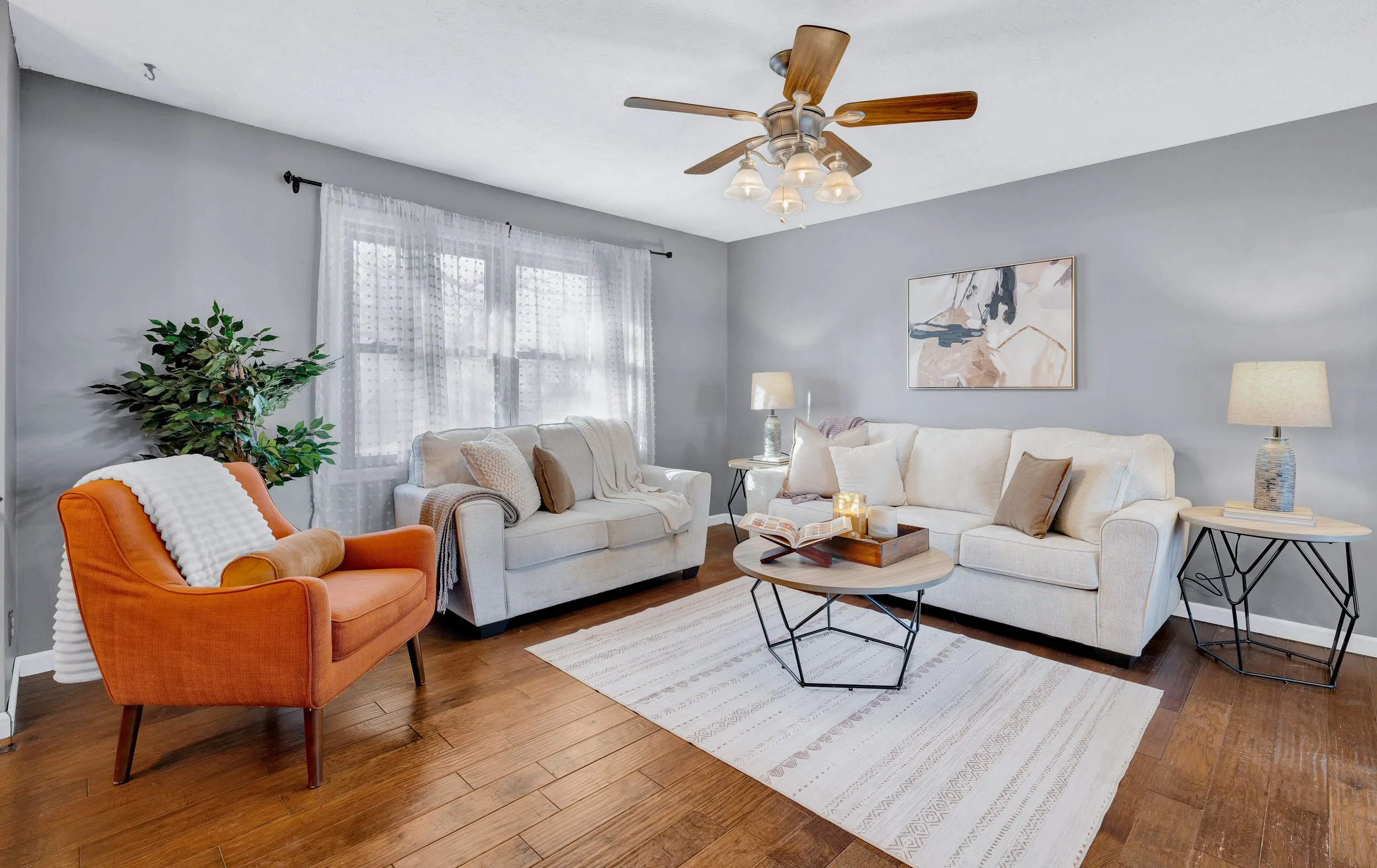
Physical staging is the real thing. Furniture in the room. Textures buyers can see from the doorway. A space that looks and feels lived-in during showings, open houses, and video walkthroughs.
That presence matters. When buyers walk through a staged home, they're experiencing the space directly, not imagining it. For higher-priced listings, larger homes with complex floor plans, or properties where the emotional pull of the sale matters most, physical staging earns its cost.
It also performs well on listing video. If your media package includes a cinematic walkthrough or agent tour video, physical staging gives the camera something real to work with. Virtual furniture doesn't translate to video.
Where it struggles: Cost and logistics. A full physical staging in the Fox Valley market can run anywhere from $1,500 to $4,000 or more depending on home size, rental duration, and the staging company. That's before you factor in availability, move-in and move-out scheduling, and the risk that the property sits longer than the rental window covers.
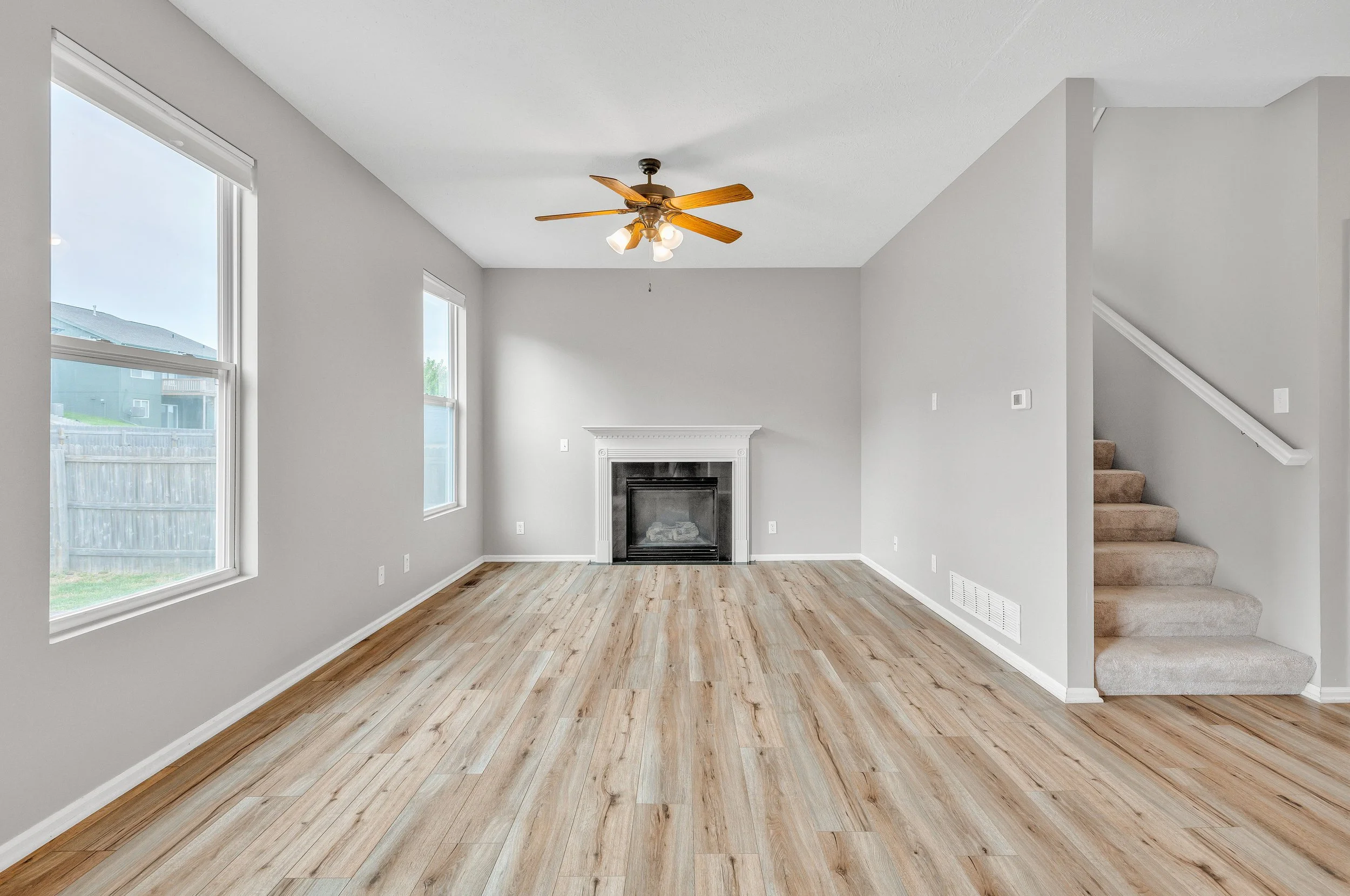
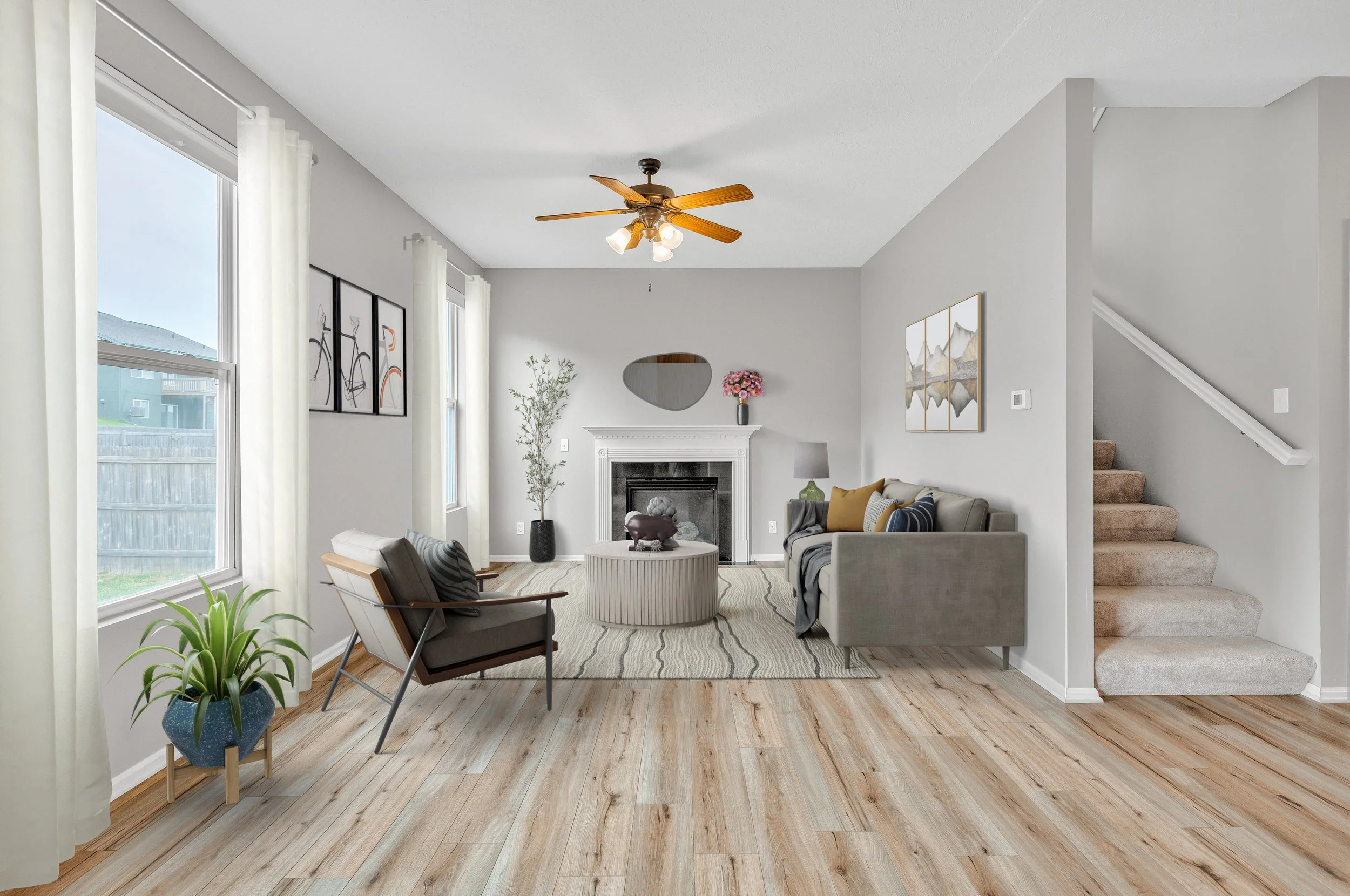
Here’s the same room with virtual staging applied.
What Virtual Staging Does Well
Virtual staging takes an empty room and places photorealistic furniture into the still images. Done well, the result is indistinguishable from a staged photo, and it covers the exact use case where staging matters most: the online listing.
Here's the reality of how buyers shop today. The first showing doesn't happen at the front door. It happens on Zillow, Realtor.com, or the MLS at 9:30 on a Tuesday night. If your listing photos show empty white rooms, buyers scroll past. Virtual staging gives those photos a fighting chance.
The cost difference is significant. Professional virtual staging typically runs $25 to $75 per image depending on the provider and complexity. A full set of staged listing photos, covering 10 to 12 rooms, comes in well under $500. That's a fraction of physical staging, with no scheduling dependencies and a 24 to 48-hour turnaround.
Where it struggles: It only exists in the photos. If a buyer walks through the property and sees empty rooms, there's a disconnect. That gap can be managed. Agents who use virtual staging typically set clear expectations upfront and present the staged images on an iPad or printed sheets during showings. But it's a real consideration.
A Practical Framework for Deciding
Neither option is universally right. Here's how I'd think about it:
Virtual staging makes sense when:
The listing is vacant and the seller's budget is tight
The property's primary traffic will come from online search
You need quick turnaround for an accelerated timeline
The home is in a price range where physical staging ROI is questionable
Physical staging makes sense when:
The listing is high-end or luxury, where presentation sets the tone for negotiations
You're investing in listing video and need real furniture on camera
The floor plan is unconventional and buyers need help visualizing room function
The seller or brokerage has the budget and the timeline supports it
A hybrid approach works well in many situations. Virtual staging covers the full room set in listing photos, and physical staging handles a few key spaces like the living room and primary bedroom for open houses. You get broad online appeal without the full cost of staging the entire home.
What This Means for Your Listing Photos
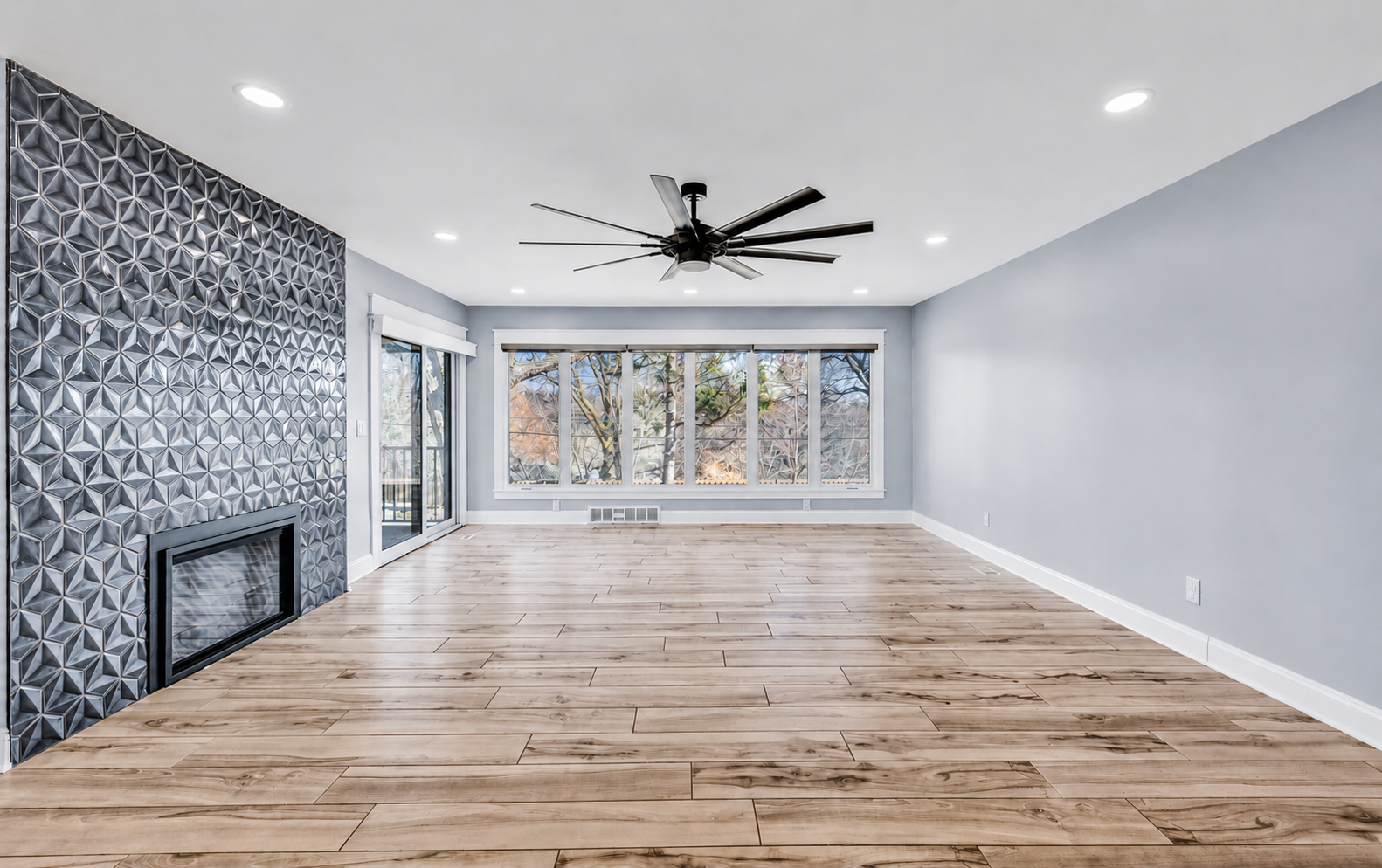
If you're using virtual staging, the quality of the underlying photography matters more, not less. The empty room needs clean light, proper exposure, and straight lines because the virtual furniture has to sit realistically in that space. Rushed or poorly exposed images make the compositing obvious, and obvious compositing kills the effect.
My HDR photography workflow is built to deliver the clean, well-lit empty room shots that virtual staging requires. Whether your seller goes physical, virtual, or hybrid, the foundation is the same: photos that show the space accurately and make buyers want to see more.
If you have a vacant listing coming up and you're weighing your options, I'm happy to talk through what would work best for that specific property. Reach out at gabrielkhanmedia.com or call 630-474-5290.
Gabriel Khan Media serves the Fox Valley corridor, including St. Charles, Geneva, Batavia, Elgin, Hampshire, and surrounding communities, with HDR listing photography, aerial imaging, iGUIDE 3D virtual tours, and virtual staging.