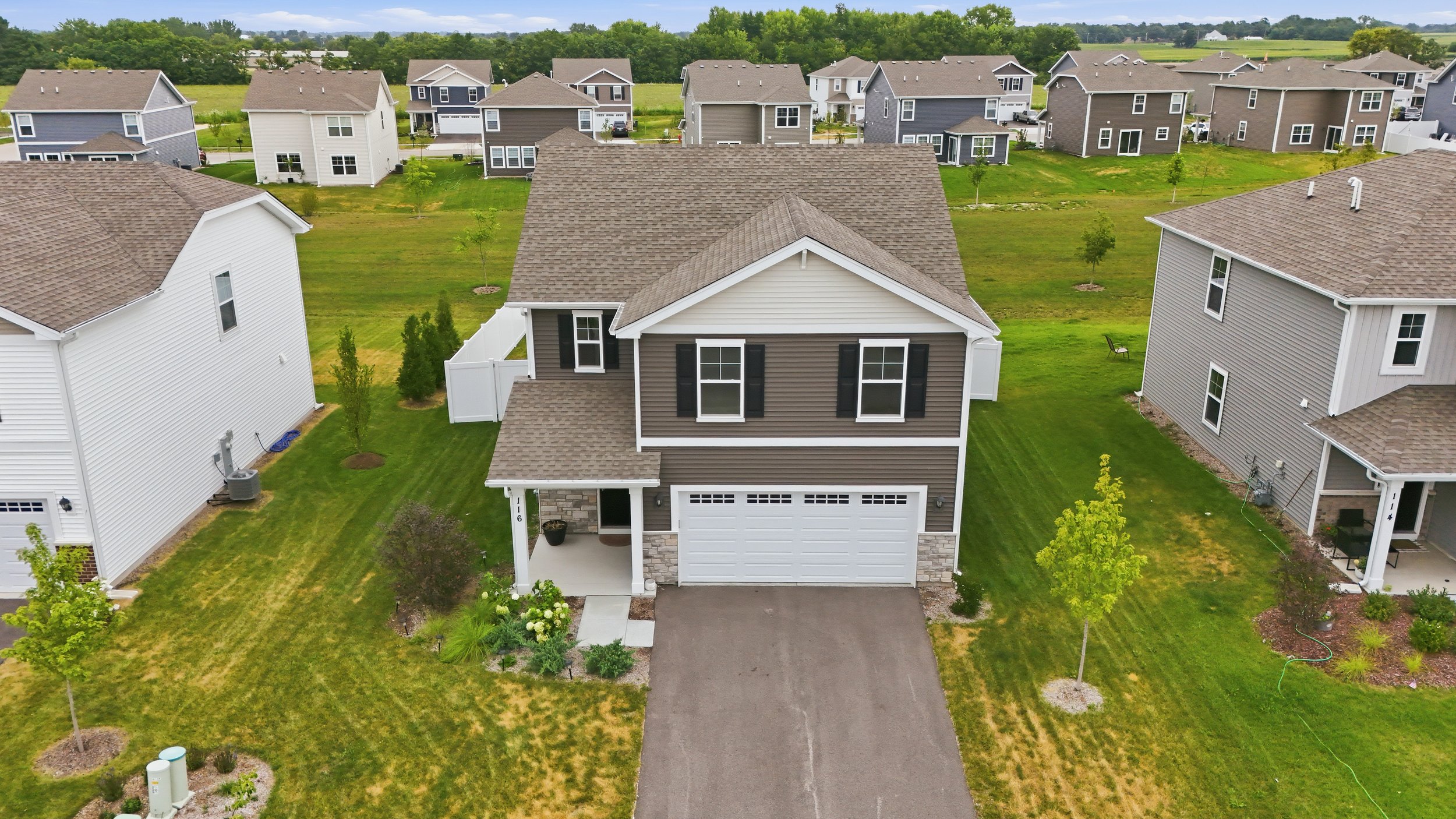
Gabriel Carlson, Owner | Gabriel Khan Media Gabriel Carlson, Owner | Gabriel Khan Media

the relocating buyer: why out-of-town buyers need more than photos

Relocating buyers cannot pop over for a second showing. They are making one of the largest financial decisions of their lives almost entirely based on what they see on a screen. Here is what that means for how a listing needs to be presented.

If you work with relocation clients, you know the situation. Your buyer is in Dallas or Charlotte or San Diego. They have a job offer in the Fox Valley and a short window to make a decision. They cannot pop over for a second showing. They cannot drive the neighborhood on a Sunday to get a feel for the street. They are making one of the largest financial decisions of their lives almost entirely based on what they see on a screen.

That changes what a listing needs to do.

Professional real estate photography of a modern kitchen with walnut cabinetry, dark stone countertops, and city views through floor-to-ceiling windows.

The Online Search Is the Showing

For most buyers, the home search starts online. For a relocating buyer, it often stays there -- at least through the early rounds of decision making. They are building a mental picture of a home, a neighborhood, and a lifestyle from whatever media an agent has put together.

Photos are the starting point. But photos alone leave gaps. They show a room, not how it flows. They show a kitchen, not how it connects to the living space. For a buyer who cannot walk through the front door, those gaps create hesitation. And hesitation leads to passes.

In the Fox Valley, homes are averaging 48 days on market. A relocating buyer who feels genuinely confident about a property remotely will move faster and with more conviction than one who is still uncertain after three rounds of back and forth with their agent.

Twilight exterior photograph of a residential property with a pool, outdoor seating, and warm interior lighting glowing through large windows against a pink and purple sunset sky.

What Relocation Clients Are Actually Looking For

Agents with relocation clients consistently ask for the same things: video, floor plans, and virtual tours. Not because they are being demanding, but because their clients are trying to make informed decisions without the ability to visit repeatedly.

Video gives a relocating buyer something photos cannot. A sense of how a space actually feels. They can read the ceiling height, understand how rooms connect, and get a real sense of natural light. Listings with video receive 403% more inquiries than those without. For a relocation client working through a compressed timeline, that level of engagement often turns into a showing scheduled around a single visit to the area.

Floor plans answer the questions that even strong photography leaves open. Where are the bedrooms in relation to each other? How does the primary suite sit relative to the rest of the house? A buyer studying a floor plan from a hotel room the night before their visit is doing the same work a local buyer does on a second or third showing.

An iGUIDE 3D virtual tour pulls it all together. A buyer can move through the home at their own pace, return to specific rooms, and get real measurements. By the time they arrive for an in-person visit, they already know the home. That familiarity matters when the schedule only allows for one or two showings.

What This Means for the Listing Agent

When you bring a listing to market with full media -- photography, video, drone, and a 3D tour with integrated floor plans -- you are not just serving the seller. You are giving every agent with a relocation client a reason to put your listing on the short list.

Relocation buyers are motivated. They have timelines, they have budgets, and they have already decided to move. What they need is a listing that gives them enough to act on. The agents who consistently win that business are the ones whose listings make confidence easy to build.

In a market like the Fox Valley, where buyers are coming from Chicago, from out of state, and through corporate relocations into the region, that is not a minor advantage. It shows up in showings, in offers, and in closings.

Twilight exterior photograph of a residential home with a stamped concrete patio, Adirondack seating around a fire pit, manicured lawn, and warm interior lighting against a dramatic sunset sky.
Read More
Gabriel Carlson, Owner | Gabriel Khan Media Gabriel Carlson, Owner | Gabriel Khan Media

What drone imagery actually does for a real estate listing

Aerial drone imagery does more than look impressive. Here's what it actually accomplishes for a real estate listing -- and why it works best as part of a complete media package.

Most agents already know drone photos exist. Fewer have thought through what they actually accomplish for a listing -- and what they don't.

Aerial imagery isn't just a visual upgrade. It adds a layer of context that ground-level photography simply cannot provide. Here's what it does when it's used well.

Aerial drone photo showing a residential property with a corner lot, curved driveway, and mature landscaping.

It shows the lot, not just the house

Interior and exterior photography captures the structure. Drone captures the land.

For buyers, lot size on a spec sheet is an abstraction. Seeing it from above makes it real. A half-acre lot reads very differently in aerial than it does as "0.52 ac" in the MLS. Corner lots, pie-shaped lots, rear-facing lots with alley access -- these are all features that aerial makes immediately legible.

This matters most for properties where the land itself is part of the value: large suburban lots, new construction on oversized parcels, rural acreage, or any listing where outdoor space is a primary selling point.

Wide aerial drone photo showing a residential property in context of surrounding neighborhood, streets, and open green space.

It answers the location question before buyers even ask

"How close is it to the highway?" "Is there green space nearby?" "What's the neighborhood actually like?"

Buyers ask these questions every time. Drone answers them visually before they have to.

An aerial shot that shows a listing two blocks from a forest preserve, or backing up to open farmland, or situated on a quiet cul-de-sac at the edge of a subdivision -- that context closes the gap between curiosity and confidence. Buyers who might have driven past the property on a weekend will book a showing instead.

For agents, this is particularly useful when representing a property in a location that has strong positional advantages that are hard to convey in ground-level images. The aerial makes the pitch for you.

Aerial drone photo showing a waterfront property with a distinctive roofline, lot boundaries, and adjacent lake access.

It gives buyers a structural overview they can't get otherwise

Buyers want to understand a property as a whole before they set foot inside it. Drone imagery provides that top-down orientation -- the roofline, the footprint, the relationship between the house and the garage, the driveway configuration, mature landscaping, and how the property sits on the lot.

This is especially relevant for larger homes, properties with detached structures, or any listing where the site layout is part of the appeal. It also reinforces quality: a well-maintained property with a clean roofline and healthy landscaping looks its best from above.

What drone doesn't replace

Aerial imagery works best as part of a complete media package, not a standalone feature. It provides context and overview, but interior photography, virtual tours, and floor plans are still what buyers rely on when evaluating the actual living spaces.

The combination is what moves listings. Aerial sets the stage. Interior media closes it.

For agents serving the Fox Valley and Northwest Chicagoland corridor -- where lot size and neighborhood character are often key differentiators -- drone imagery is one of the more direct ways to surface value that the MLS description alone won't carry.

Read More
Gabriel Carlson, Owner | Gabriel Khan Media Gabriel Carlson, Owner | Gabriel Khan Media

how to win the listing presentation in st. charles, geneva, batavia

Winning the listing presentation in St. Charles, Geneva, and Batavia comes down to one thing: proof. Here's how professional media becomes your most powerful tool before you even sit down with the seller.
Every agent in the Fox Valley knows the feeling. You walk into a listing presentation prepared — comps pulled, marketing plan ready, track record solid. And you still lose it.

Sometimes it comes down to one thing: the seller looked you up beforehand, found your listings online, and the photos didn't match the story you were telling in the room.

Professional media isn't just a deliverable. It's proof.

Aerial view of a luxury estate with pond and outbuilding — professional real estate photography by Gabriel Khan Media

What Sellers in St. Charles, Geneva, and Batavia Are Actually Evaluating

The Fox Valley market attracts discerning sellers. Properties in St. Charles, Geneva, and Batavia — whether they're $400,000 ranch homes or $900,000 custom builds along the river — draw buyers who shop online first and tour second. Sellers know this. They're not just hiring an agent. They're hiring the marketing.

When you walk into a listing presentation in this corridor, the seller has already seen what your last three listings looked like online. If those listings had dark photos, cluttered compositions, or no floor plan, that's the impression you're walking in with.

Professional media changes the equation. It tells the seller that you take the presentation of their home as seriously as they do.

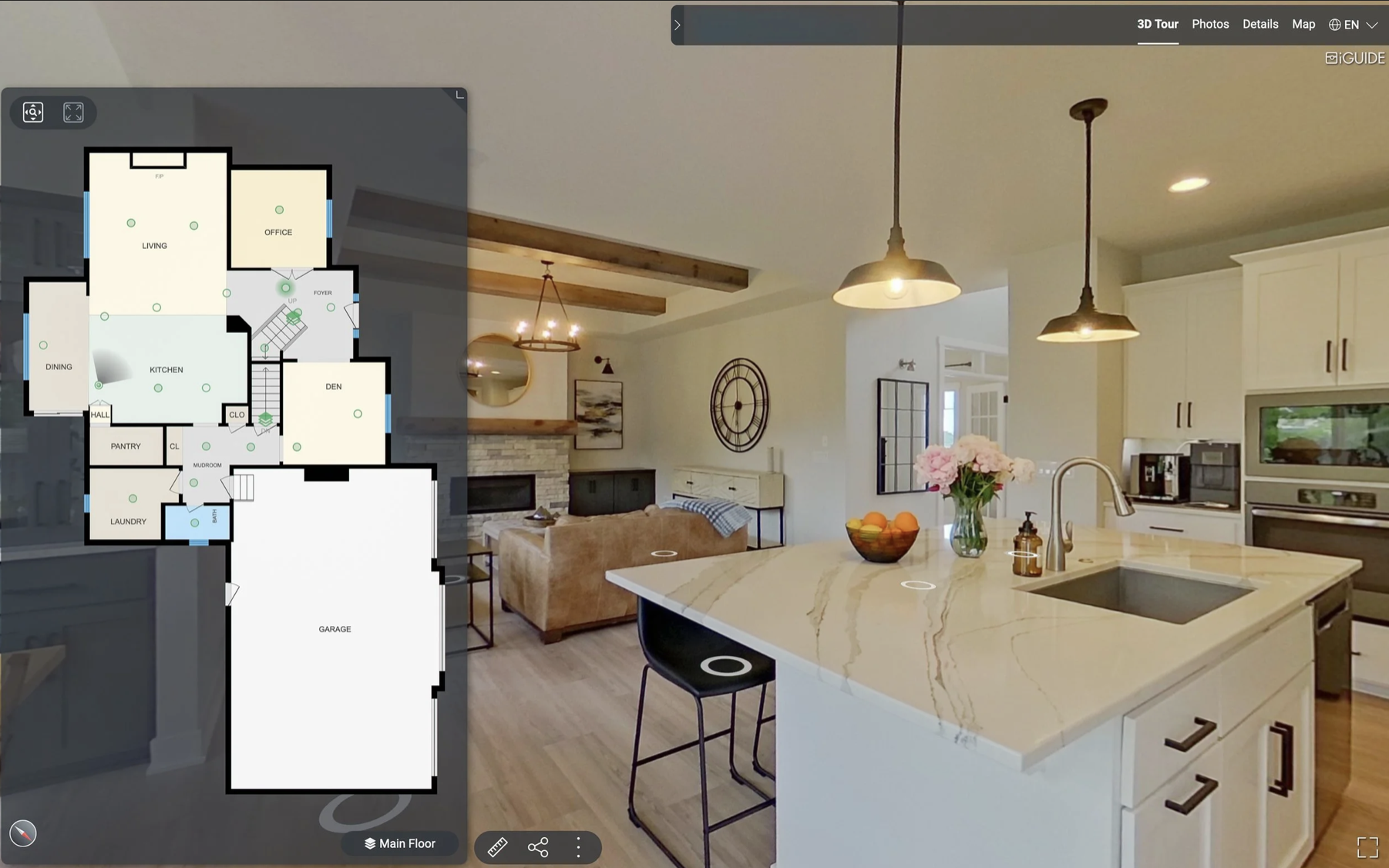
iGUIDE 3D virtual tour interface showing floor plan overlay and open-concept kitchen — Gabriel Khan Media

The Listing Presentation Isn't the End — It's the Beginning

Here's what most agents underestimate: the media you use to market a listing is also the media that markets you.

Every buyer who walks through a well-photographed property sees your name attached to quality work. Every seller who gets a showing request within the first 48 hours connects that activity to the media that drove it. And every agent who refers a client — because they saw how you present a home — made that decision based on what they've observed over time.

In markets like Geneva and St. Charles, where inventory moves and repeat business is the lifeblood of a sustainable practice, that compounding effect matters more than any single transaction.

An iGUIDE 3D tour with an integrated floor plan, professional HDR photography, and aerial imaging doesn't just help sell the home. It gives you something to show the next seller before you even sit down.

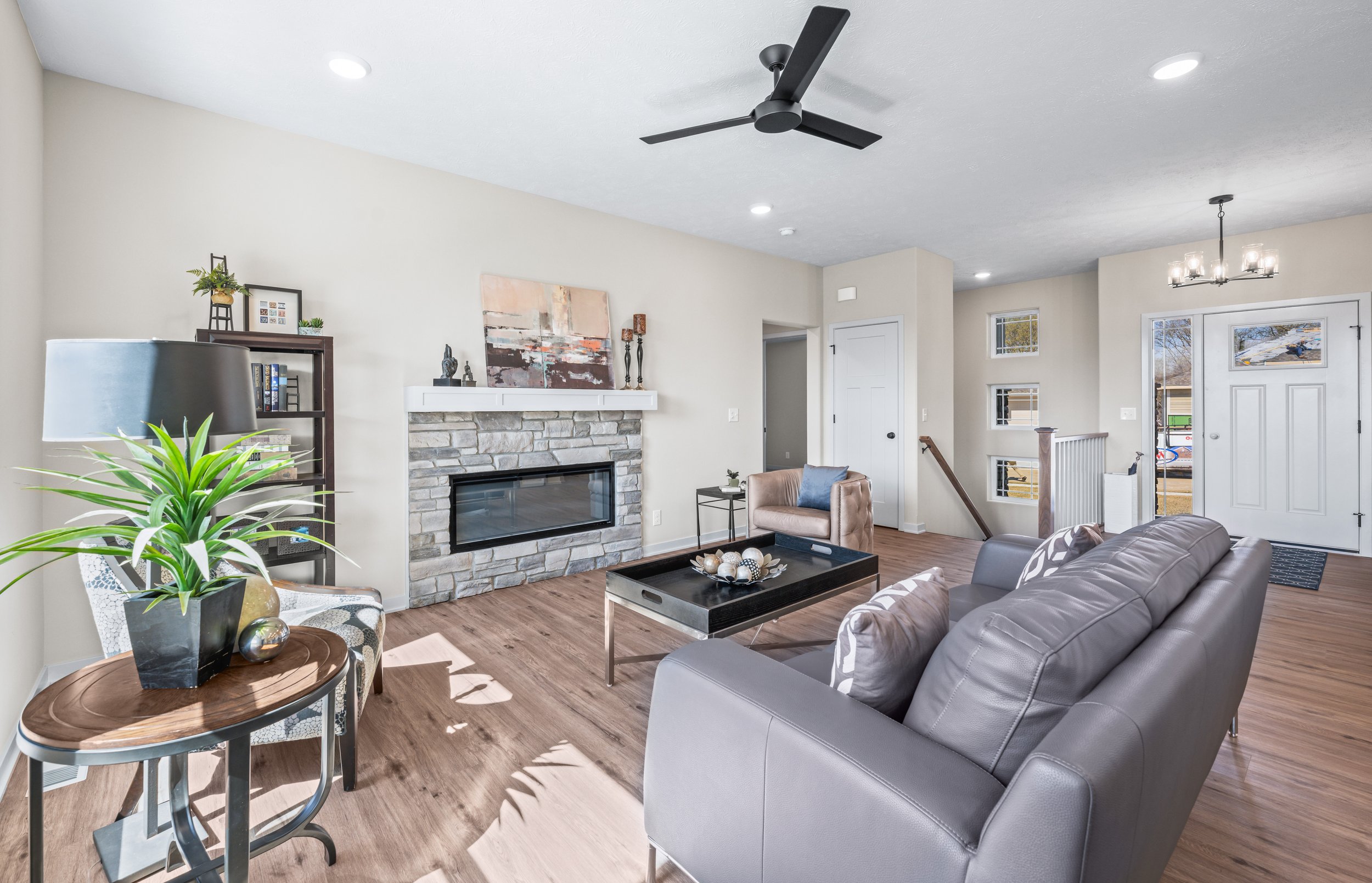
Bright sunroom interior with floor-to-ceiling windows — professional real estate photography by Gabriel Khan Media

What a Complete Media Package Looks Like

For most listings in the St. Charles, Geneva, and Batavia corridor, a competitive media package includes HDR photography that captures accurate color, light, and detail; aerial imaging that shows the lot, the neighborhood, and proximity to the Fox River or downtown areas; an iGUIDE 3D virtual tour with ANSI-standard floor plans built in; and listing video for properties where the layout and flow are part of the story.

This isn't about doing more for the sake of it. It's about giving serious buyers what they need to make a decision — and giving serious sellers a reason to choose you.

If you're presenting in the Fox Valley and want media that works as hard as your pitch does, let's talk.

Read More
Gabriel Carlson, Owner | Gabriel Khan Media Gabriel Carlson, Owner | Gabriel Khan Media

what is an iguide 3d tour — and why buyers (and agents) love them

Most 3D tour platforms treat a measured floor plan as an add-on. iGUIDE includes one automatically -- ANSI-compliant, accurate to appraiser standards, and delivered with every capture. Here's why Fox Valley agents are adding it to their standard listing package.
There's a moment in every listing presentation where the conversation turns to marketing. You've covered pricing strategy, your track record, your market knowledge. Then the seller asks: "What are you going to do to make my home stand out?"

If your answer still stops at photography, it's time to add a new tool to that conversation.

What iGUIDE Actually Is

iGUIDE is an immersive 3D tour platform that does something no standard photography can: it lets a buyer walk through a home remotely, on their own time, at their own pace. They can move from room to room, look up and down, get a true sense of how spaces connect, and understand the flow of a home before they ever set foot inside.

But here's what separates iGUIDE from other 3D tour platforms. With most 3D tour solutions on the market, a measured floor plan is either an add-on feature, an upcharge, or not available at all. With iGUIDE, every capture automatically generates a professionally measured, ANSI-compliant interactive floor plan -- included, not extra. Not an approximation. Not a rough sketch. Accurate measurements, room dimensions, and total square footage that meet the same standards used by appraisers.

That combination, immersive walkthrough plus verified floor plan at no additional cost, is what makes iGUIDE a serious listing tool rather than a novelty.

iGUIDE 3D tour interface showing interactive floor plan alongside immersive interior view

Why Agents Are Using It

The practical case for iGUIDE breaks down into three groups of buyers.

The first is the cautious, research-driven buyer who wants to fully vet a home before committing to a showing. A 3D tour lets them do that. They'll spend ten minutes walking the home virtually and arrive at the showing already sold on the layout. That saves everyone time and filters out low-intent foot traffic.

The second is the out-of-town or relocating buyer. Fox Valley agents deal with this constantly -- professionals transferring into the Chicagoland market from out of state who cannot visit in person before making a decision. For this buyer, the iGUIDE tour isn't a nice-to-have. It's how they build enough confidence to act. Agents who offer this as a standard part of their listing package are simply more competitive when working with relocation clients.

The third group is buyers who've already seen the home and want to come back to it. The floor plan becomes a reference they return to -- measuring furniture, planning rooms, sharing with a spouse. That kind of sustained engagement with a listing is something static photos cannot create.

iGUIDE ANSI-compliant floor plan showing accurate room dimensions and square footage measurements

What It Does For Your Brand

Beyond any individual listing, offering iGUIDE consistently does something for your reputation over time.

Sellers notice when their agent invests in serious marketing. They talk about it. The agent who shows up with a media package that includes a 3D tour and verified floor plan is communicating something specific: that they take the presentation of their client's home seriously.

That's not a small thing in a market where sellers have choices.

The Floor Plan Conversation

One last point that doesn't get mentioned enough. The ANSI-compliant floor plan iGUIDE generates is increasingly being used by agents to verify listed square footage -- which matters more than ever in a market where buyers are doing their own research and catching discrepancies. Having accurate measurements attached to your listing protects everyone involved.

It's a detail that sophisticated sellers and buyers both appreciate.

Buyer browsing an iGUIDE 3D tour and floor plan on a laptop

If you're listing homes in the Fox Valley and want to give buyers the experience that moves them from scrolling to scheduling, iGUIDE is worth adding to your standard package. Gabriel Khan Media includes iGUIDE capture as part of our full-service media offerings. Booking is straightforward, and the floor plan is delivered with every tour.

Read More
Gabriel Carlson, Owner | Gabriel Khan Media Gabriel Carlson, Owner | Gabriel Khan Media

Why Professional Listing Media Matters More Than Ever in the Fox Valley Market

The Fox Valley real estate market is in an interesting place right now. Inventory is tight, down nearly 9% in the Chicago metro year-over-year, prices are rising, and the nine-county region is projected to see a 5% increase in median home prices in 2026. On paper, that sounds like good news for sellers and the agents who represent them.

But here's what the numbers don't tell you: buyers are cautious.

Despite the competitive conditions, today's buyers are taking their time. They're scrolling more listings, doing more research, and making fewer impulsive decisions than they did during the frenzy of 2021 and 2022. They're aware of economic uncertainty. They're watching interest rates. And before they ever pick up the phone to schedule a showing, they've already made a judgment about your listing based on one thing, the media.

The Scroll Is the First Showing

Every listing in the Fox Valley market, from St. Charles and Geneva to Elgin, Algonquin, and Huntley, is competing for the same pool of cautious, informed buyers at the same time. At the $400,000 to $700,000 price point that defines much of this corridor, buyers have options. They're not just comparing homes. They're comparing first impressions.

A listing with flat, poorly lit photography signals one of two things to a buyer: either the agent doesn't care, or the seller doesn't. Neither is the message you want to send on a property you've worked hard to win.

Professional media, sharp interior and exterior photography, drone imagery that puts the property in context, a floor plan that helps buyers visualize the space, does something that average media simply cannot. It makes a buyer stop scrolling. And in a market where cautious buyers are moving carefully, stopping the scroll is everything.

The Economic Uncertainty Argument Cuts Both Ways

Some agents pull back on media spending when the market feels uncertain. The thinking goes: why invest more when things are unpredictable?

It's the wrong call, and here's why.

When the market was red-hot, even mediocre listings got showings because buyers were desperate. Multiple offers, waived inspections, sight-unseen purchases, the urgency of that market covered a lot of sins. That market is gone. Today's buyer has time to be selective. They will skip your listing if the media doesn't earn their attention.

Professional media isn't a luxury you add when the market is strong. It's the baseline standard that keeps your listings competitive when buyers have the luxury of being choosy.

What the Fox Valley Buyer Is Actually Looking For

The Fox Valley corridor attracts a specific kind of buyer. Young families relocating from Chicago looking for more space. Move-up buyers upgrading within the suburbs. Relocating professionals transferring into the market who may not be able to visit in person before making a decision.

That last group is especially important. A relocating buyer who can't visit in person relies almost entirely on the media to make their decision about whether to schedule a showing, or in some cases, whether to make an offer. A professional listing film, an iGUIDE 3D tour with accurate floor plans and ANSI-compliant measurements, and drone imagery that shows the lot, the neighborhood, and the surroundings all work together to give that buyer the confidence to act.

For listings above $500,000, this isn't optional. It's expected.

The Agent's Brand Is on the Line Too

Here's the part of this conversation that doesn't get said enough: the media on your listings reflects on you, not just the property.

Sellers in the Fox Valley are sophisticated. They've seen beautifully presented listings. They know what professional media looks like. When they interview agents, they're evaluating whether that agent is going to represent their home, and their investment, at the level it deserves.

Agents who consistently show up with high-quality media build a reputation that compounds over time. Referrals come from sellers who felt their home was presented with care. Repeat business comes from agents whose listings perform. That reputation is built one listing at a time, and it starts with the media.

The Bottom Line

The Fox Valley market in 2026 rewards preparation. Tight inventory and rising prices create opportunity, but cautious buyers mean the listings that win are the ones that earn attention from the first image. Professional media isn't a hedge against a slow market. It's the standard that separates agents who build lasting businesses from agents who get by when conditions are easy.

If you're listing a home in the Fox Valley or Northwest Chicagoland and you want media that reflects the quality of your work, Gabriel Khan Media is here to help. Booking is simple, and the difference shows up in every listing.

Read More